
Last updated November 22, 2026
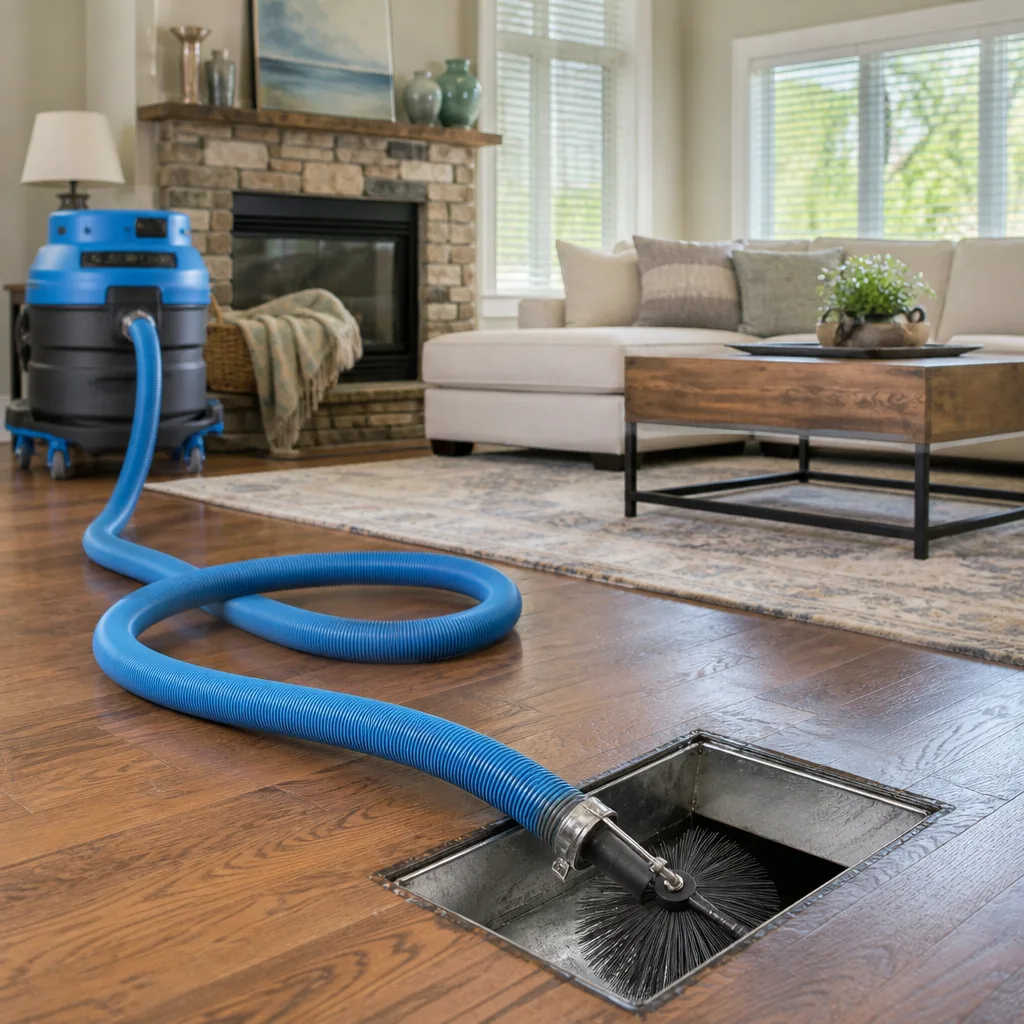 Whole-home duct cleaning
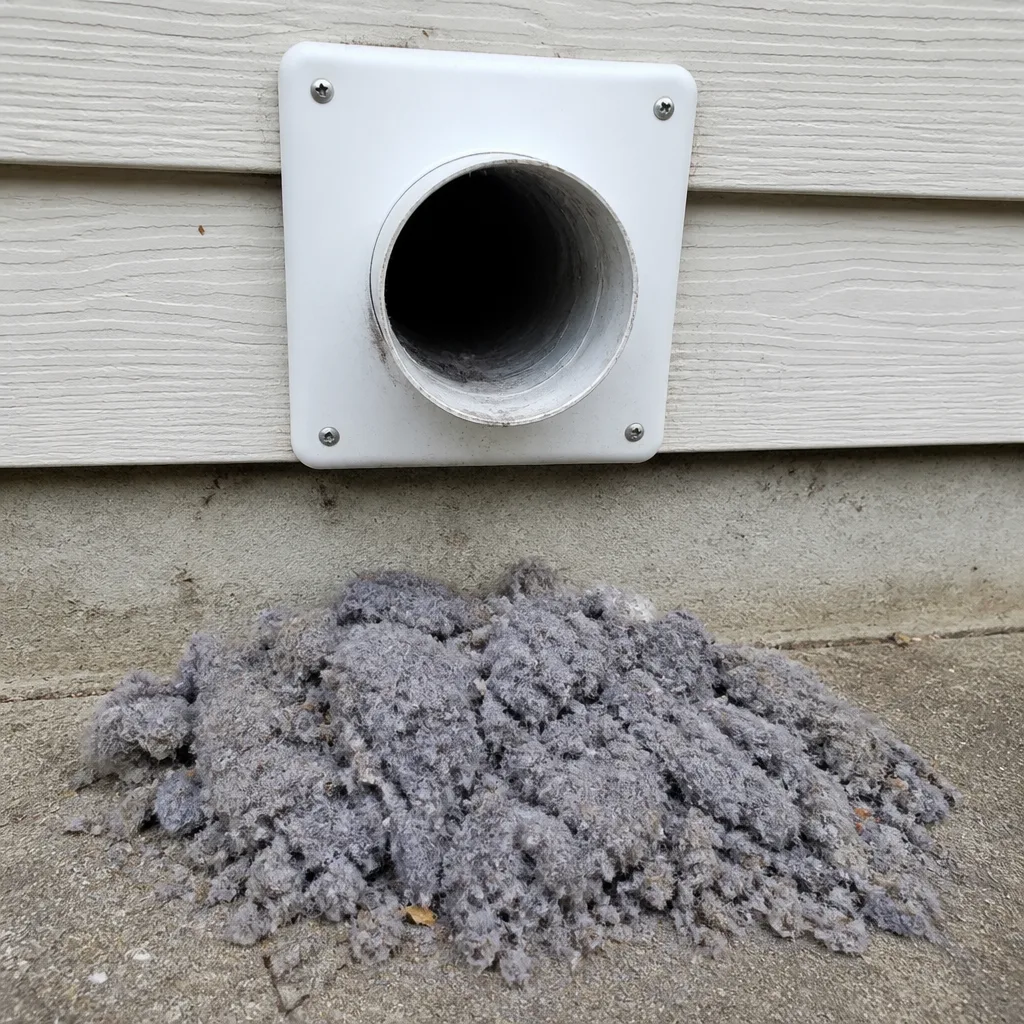 Dryer vent cleaning
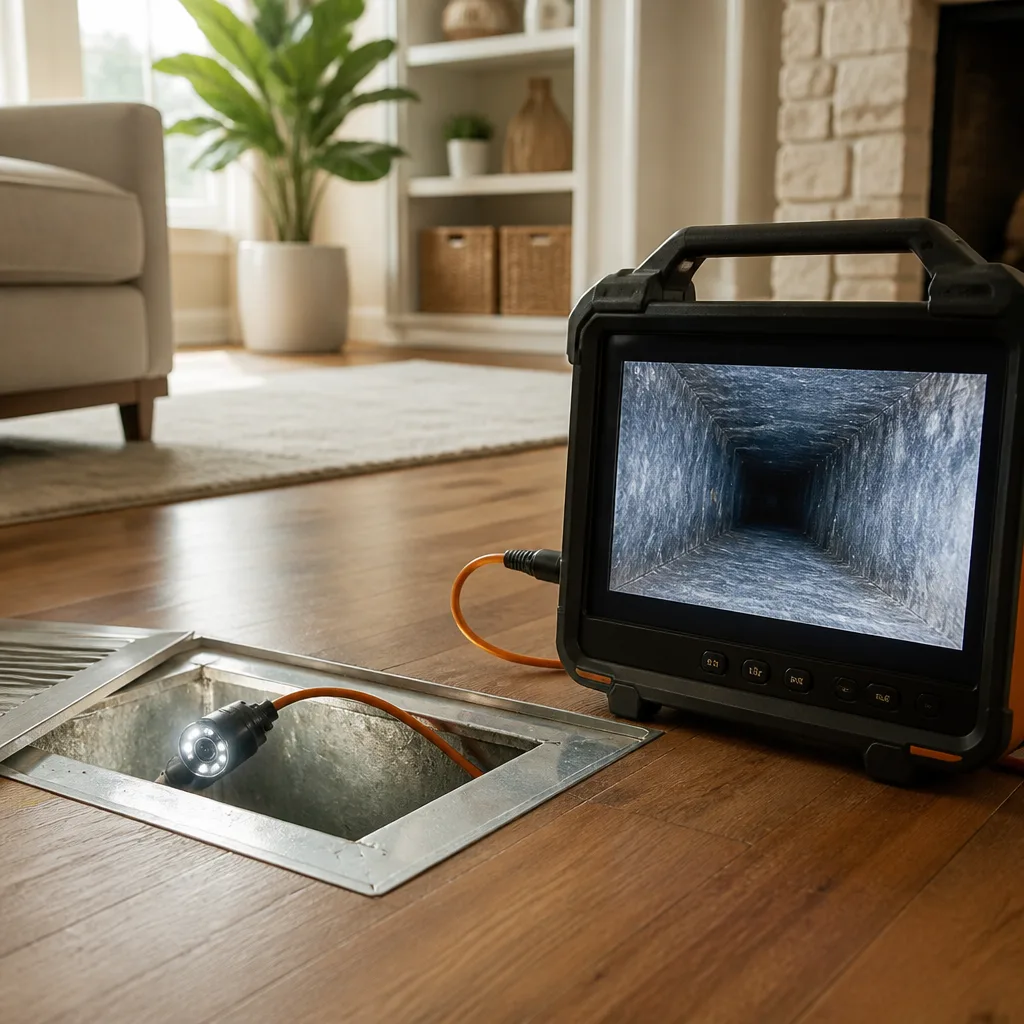 Camera inspection
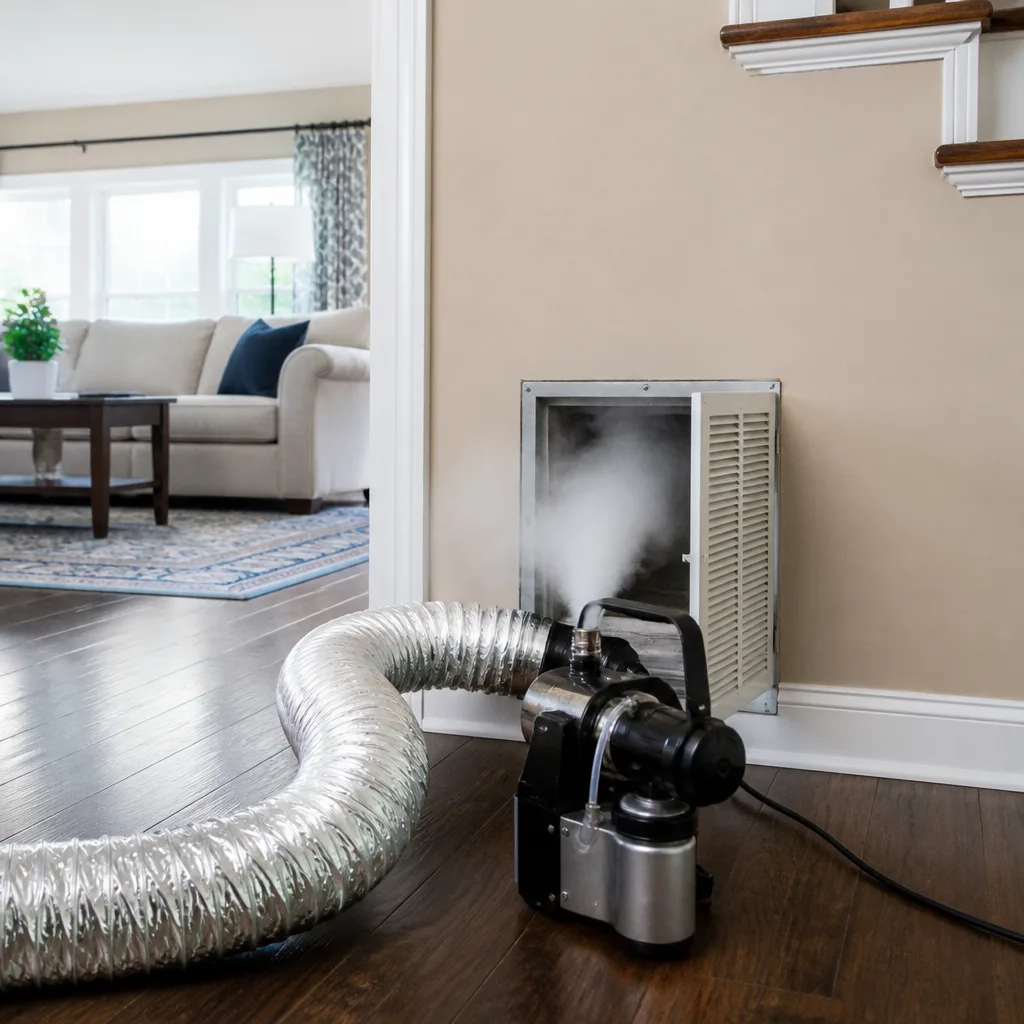 Sanitizing & deodorizing
Whole-system duct and dryer vent check with before-and-after photos - you see exactly what came out of your vents
That "$99 whole-house special" is a bait ad - the real number appears once they are in your hallway, or the "clean" is a shop-vac at the register. We photograph the inside of your ducts before and after instead.
Air Duct Cleaning Permits, Codes & Inspections in Los Feliz, CA: What You Need to Know
Most duct cleaning doesn’t need a permit. The interesting part is what cleaning uncovers. A camera run through the trunks in a 1920s bungalow off Vermont Avenue or a hillside ranch above Franklin can turn up a disconnected trunk line, a crushed flex run, or returns that were never sized right to begin with. At that point you’re not cleaning ducts anymore. You’re doing mechanical work on a dwelling, inside Los Angeles city limits, and the rules change. This guide maps exactly where the permit line sits for Los Feliz property owners, what the City of Los Angeles Building and Safety department expects to see when ductwork or an air handler gets modified, how Title 24 energy rules apply to replacement duct runs, and what a real inspection covers. By the end you’ll know which contractor class to ask for, how to verify it, and why undocumented mechanical work in a wall or attic cavity can complicate an insurance claim later.
Quick Answer
Air duct cleaning by itself generally does not require a permit in Los Feliz, since it’s maintenance rather than construction. However, repairs that replace ductwork, modify the air handler, or add a new return air pathway typically do require a mechanical permit from the City of Los Angeles Department of Building and Safety, and replacement duct runs must meet California Title 24 requirements including duct sealing verification by a HERS rater and the required insulation R-value. Any company doing that repair work should be a licensed C-20 HVAC contractor, and you can verify a license through the California Contractors State License Board before work starts.
Styles & brands we work with
- Whole-home duct cleaning
- Dryer vent cleaning
- Camera inspection
- Sanitizing & deodorizing
Table of Contents
- Cleaning Versus Construction: Where the Permit Line Actually Is
- LADBS Versus LA County: Which Jurisdiction Covers Your Los Feliz Address
- Title 24 and Duct Replacement: Sealing Verification and R-Values
- What Contractor License Class Duct Repair Requires and How to Check It
- How Permit History Affects Insurance Claims
- What a LADBS Inspection Actually Covers
- Los Feliz Neighborhoods, Housing Types, and Duct Realities
- Permit Records and Resale in Los Feliz
Cleaning Versus Construction: Where the Permit Line Actually Is
The word “duct work” gets used for two very different things, and only one of them involves the building department. Mechanical cleaning – dislodging debris from the inside of supply and return ducts with a rotary brush system and pulling it out with negative pressure – is maintenance. You don’t pull a permit to vacuum a duct any more than you pull one to change a furnace filter. But the moment a job involves altering the system’s physical components, you’ve crossed into permitted territory in the City of Los Angeles.
Here’s how to sort a recommendation into one category or the other:
- Maintenance, no permit: source removal cleaning of supply and return ducts, dryer vent cleaning, coil and blower cleaning inside the existing air handler, sanitizing a cleaned system with an approved product.
- Permitted mechanical work: replacing sections of duct or an entire duct run, adding a new return air pathway, relocating a register, modifying the air handler cabinet or plenum, and in many cases sealing a major disconnected trunk in a way that changes the assembly.
- The gray zone: sealing small seam leaks, re-taping accessible joints, and reconnecting a boot to a register. Much of this is minor repair that doesn’t change the system, but if a contractor proposes anything more than that, ask them plainly whether the work they’re quoting requires a permit. A straight answer is a good sign.
We’re deliberately careful about this because it’s the source of most of the confusion we run into. Homeowners get told “duct cleaning needs a permit” by one company and “no permit needed” by another, and both are half right. Cleaning doesn’t. Rebuilding ductwork does. Our approach on a job that crosses that line is to tell you early, so you can decide what to do about it before a technician has a brush in the plenum. If you want to see how a straight duct cleaning job is scoped and priced, look at our air duct cleaning page.
LADBS Versus LA County: Which Jurisdiction Covers Your Los Feliz Address
Los Feliz sits inside the City of Los Angeles, not unincorporated LA County. That matters because building regulations, permits and inspections for a property inside city limits are handled by the City of Los Angeles Department of Building and Safety, not the County of Los Angeles department that serves unincorporated areas. When a duct repair needs a mechanical permit on a Los Feliz address, LADBS is the office that issues it and inspects the work.
There are a few exceptions worth knowing about:
- Unincorporated pockets. A handful of Los Angeles-area addresses sit in unincorporated county territory. If you’re not certain, look up your parcel through the city’s online permit and property records system, or call the building department and give them the address.
- Historic and overlay zones. Parts of Los Feliz contain designated historic resources and specific plan areas. A mechanical permit can be straightforward while a separate approval is also needed for work that touches a protected exterior or structural feature. Duct replacement inside the attic usually isn’t that, but it’s worth asking.
- Homeowner association rules. HOA or condo association approval is separate from permit jurisdiction and often runs on its own timeline. Duct work at a multi-unit property can require association sign-off on access and inspection scheduling.
For most Los Feliz property owners, working through LADBS is a matter of filing the mechanical permit, scheduling an inspection at the right point in the job, and keeping the final sign-off in your records. That’s typically the contractor’s responsibility, but it’s your file. Keep it. Our air duct cleaning Los Feliz team can tell you whether what your ducts need is maintenance or permitted repair, and we don’t sell construction work we aren’t the right company to perform.
Title 24 and Duct Replacement: Sealing Verification and R-Values
California’s Title 24 energy code is where duct replacement gets more demanding than a lot of homeowners expect. The code treats the duct system as part of the building’s energy envelope, which means replacement ductwork has to demonstrate that it doesn’t leak your conditioned air into an attic or crawlspace. In practice that touches two things you should be ready for.
Duct sealing verification. When ducts are installed or significantly replaced, the work is often subject to a HERS verification – a duct leakage test performed by a certified HERS rater who isn’t the installing contractor. It’s a measurement, not an opinion. The rater runs the system, measures how much air escapes, and documents the result. If it doesn’t pass, the system gets sealed further and retested. Ask any contractor who proposes replacing duct runs how they’ll handle HERS verification, and whether the testing cost is included in the estimate.
Insulation R-value. Duct runs through an unconditioned attic space – which describes plenty of Los Feliz houses with their original attic runs – need insulation meeting the code’s requirement for the climate zone. The specific R-value number depends on that zone, and a contractor should be able to state it from the current code, not from memory. Don’t accept a vague answer here. The R-value is written into the code and into the permit documents, and it’s checkable.
Two practical notes for Los Feliz specifically. First, our climate is mild, so it’s tempting to treat duct insulation as a formality. It isn’t. Uninsulated flex runs in a hot attic lose cooling before the air reaches the room, and Title 24’s rules exist for the same reason. Second, if a contractor replaces ductwork without mentioning either HERS verification or R-values, that’s a fair sign they don’t pull permits for mechanical work. Our HVAC cleaning service stays on the maintenance side of the code, but we’re happy to tell you when the repair you need belongs on the permitted side.
What Contractor License Class Duct Repair Requires and How to Check It
Duct cleaning is a maintenance service. Duct repair and replacement – installing, modifying, or replacing parts of a warm-air heating and ventilating system – is contractor work in California, and it typically falls under the C-20 Warm-Air Heating, Ventilating and Air-Conditioning classification. That’s the class to ask about when the job goes beyond cleaning. A company that only cleans ducts isn’t necessarily the company that should be installing new ones.
Verification takes a few minutes and is worth doing before anyone starts:
- Get the contractor’s license number in writing on the estimate, not just verbally.
- Look the number up through the California Contractors State License Board’s online license lookup. Confirm the name on the license matches the name on the contract and that the license is active.
- Ask whether the license is in the name of the person or company you’re signing with – a license borrowed or “under” another company’s number is a problem.
- Ask about general liability insurance and workers’ compensation coverage as the licensed contractor would carry them. If a company can’t answer those questions in plain language, that’s your answer.
- Get the written estimate to spell out scope: what duct sections get replaced, what R-value flex goes in, whether HERS testing is included, and who pulls the permit.
One more check that’s specific to duct work: ask what cleaning equipment they use. Rotary brush systems and high-volume negative pressure equipment from makers like Rotobrush and Nikro are purpose-built for duct interiors. A retrofitted shop vac isn’t. Our technicians have up to 11 years of experience and use Rotobrush rotary contact cleaning and Nikro vacuums and are equipped with Abatement Technologies filtration for contamination control when a job calls for it.
How Permit History Affects Insurance Claims
This is the part of the conversation that doesn’t get enough attention. Insurance carriers assess claims based on documented history: what work was done on the property, when, and by whom. Undocumented mechanical work inside wall or attic cavities is one of the more common complications in claims involving mold or fire in a duct or air handler area. Not because the work caused the loss, but because the adjuster can’t verify when a component was installed, whether it was done to code, and whether the cause of the loss traces back to permitted or unpermitted work.
The realistic exposure looks like this:
- Mold claims. Moisture in an attic duct run can become a health-adjacent dispute with the carrier over whether the source was covered. A documented installation helps answer “when did this happen.”
- Fire claims. A dryer vent fire or an electrical fault near the air handler raises the question of whether the mechanical work around it was permitted and inspected. Missing permit records invite scrutiny.
- Water intrusion into a duct cavity. If a duct chase was modified without documentation and later water enters, the carrier may dispute the scope of what they owe to bring things back to code compliance.
None of this is a reason to panic about your ducts; it’s a reason to keep records. When a duct cleaning uncovers a disconnected trunk or a crushed flex run, that’s a maintenance conversation if the fix reconnects or repairs what’s there. If the fix means replacing or adding ductwork, the safest route is a permitted job with an inspection record you file away. Our dryer vent cleaning visits are a good example of the pattern: no permit required, but documenting the visit is a helpful thing to have if a claim ever comes up later.
What a LADBS Inspection Actually Covers
If your duct repair or replacement requires a mechanical permit, you’ll have an inspection at the end. Homeowners who’ve never been through it want to know what happens and what the inspector looks at. Knowing the outline takes the mystery out of it, and it lets you ask your contractor the right questions before the inspector shows up.
A mechanical inspection on ductwork typically covers:
- The permit matches the work. The inspector confirms the scope on the permit matches the scope of installation.
- Materials and installation conditions. Flex duct connectors, supports at proper intervals, transitions from rigid to flex, and sealing at joints.
- R-value of insulation on runs through unconditioned space. The insulation on attic-run duct has to meet the applicable code requirement for the climate zone.
- HERS documentation where required. The rater’s leakage-test results belong in the record, and the inspector will want to see that the duct sealing was verified.
- Connections and terminations. Ducts terminated at registers, boots properly seated, and no new openings introduced into what should be a closed system.
What the inspection does not cover is your indoor air quality, whether the cleaning was thorough, or whether the contractor’s duct cleaning method dislodged what should have been dislodged. Those are quality questions, and they fall to the company you hired. This is one more reason the two steps are worth separating in your mind: the permit-and-inspection side is the building department’s concern, and the contamination-control side is the contractor’s. We use Abatement Technologies filtration and containment equipment on contaminated jobs so that the cleaning step holds up under its own standard, and we recommend a post-cleaning visual check with photos so you can confirm the work through the return and supply runs.
Los Feliz Neighborhoods, Housing Types, and Duct Realities
Duct systems in Los Feliz aren’t uniform, and the housing stock explains a lot of the variability in what cleaning uncovers. The neighborhood around Vermont and Franklin and the blocks off Los Feliz Boulevard hold a good share of 1920s and 1930s homes with original plaster and whatever duct runs were added or modified over the decades. As you climb into the hillside streets, you’ll find attic and crawlspace configurations that are harder to access and more prone to disconnected runs after past remodeling. And in the multi-unit buildings around Hillhurst and the condo corridors, duct systems often share chases, which changes how a repair or inspection has to be scheduled around other units.
Three patterns we see across Los Feliz addresses:
- Original flex added late. Mid-century or older homes where flex duct was retrofit into an existing attic plenum. Runs get pinched at bends, disconnect at the boot, and lose efficiency.
- Post-remodel duct changes with no documentation. A previous owner’s renovation moved a register or added a return, and no permitted record exists. If a subsequent repair touches that same run, expect the permit conversation to get more involved.
- Sealing-only fixes that were done with tape. Fabric duct tape that’s dried out and failed. The old work didn’t hold, and Title 24’s sealing and HERS rules exist to keep it from being done that way on a permitted replacement.
Our climate is one of the gentler ones for ductwork – mild winters, no ice or snow load in the attic, no freeze-thaw to worry about – which means duct problems here tend to be about leakage, disconnect, and accumulated debris rather than temperature damage. That’s the good news. Our air duct cleaning Los Feliz page covers what a standard cleaning involves at Los Feliz addresses, and our HVAC cleaning page covers the air handler and coil side of the system.
Permit Records and Resale in Los Feliz
Los Angeles real estate transactions are unforgiving about permit history. A buyer’s inspection will typically include a review of permitted work, and a title and disclosure package can surface an open permit or unpermitted work that delays a sale. Duct replacement falls into the category of work that’s easy to overlook until a title search or an inspector raises it, and the cost of resolving an unpermitted record after the fact is far higher than getting the permit at the beginning.
If you’re planning to sell within a few years and your ducts need replacement rather than cleaning, this shifts the math. A permitted replacement with a HERS verification record and final inspection sign-off is a documentable improvement. A non-permitted replacement is a question mark. Either way, the file you keep matters: the permit number, the final inspection card, the HERS test report, the contractor’s license number on the estimate, and any photos of the work before and after.
For Los Feliz property owners who only need cleaning, none of this applies, and we’d rather say so clearly than manufacture a permit concern to sell a job. But when the diagnosis is repair, our answer is straightforward: we recommend a licensed contractor and document everything. If you own or manage a Los Feliz property and want to know which category your ducts fall into, call (866) 937-7218 and we’ll walk the system with you.
Common Mistakes to Avoid
- Believing “duct cleaning needs a permit” as a blanket statement. Routine cleaning doesn’t. Only construction-level work does. A company that tells you otherwise is likely upselling permitted work you don’t need.
- Believing “no permit needed for duct work” as a blanket statement too. Replacing duct runs or modifying the air handler requires a mechanical permit from LADBS. Ask the contractor directly to confirm which side of the line the proposed work sits on.
- Treating HERS verification as optional. On a permitted duct replacement, the leakage test result belongs in the record. If a contractor proposes to skip it, that’s not a shortcut; that’s a code gap that surfaces later.
- Accepting a duct “sealing” quote without asking about R-value. Replacement insulation in an unconditioned attic has to meet the code’s R-value requirement, and a quote that names no number is a quote you can’t verify.
- Hiring for repair work without checking the license classification. A C-20 classification is the one to ask about for duct installation and modification. A cleaning-only vendor isn’t the same as a licensed mechanical contractor.
- Not keeping the paper file. Permit number, final inspection card, HERS report, contractor license number, before-and-after photos. This is the file that answers the insurance adjuster’s question, not the one that requires a phone call to a contractor you can’t reach.
- Assuming county rules apply in Los Feliz. Los Feliz addresses sit inside the City of Los Angeles, and LADBS is the jurisdiction for mechanical permits. Confirm your address before you file or schedule.
See the difference
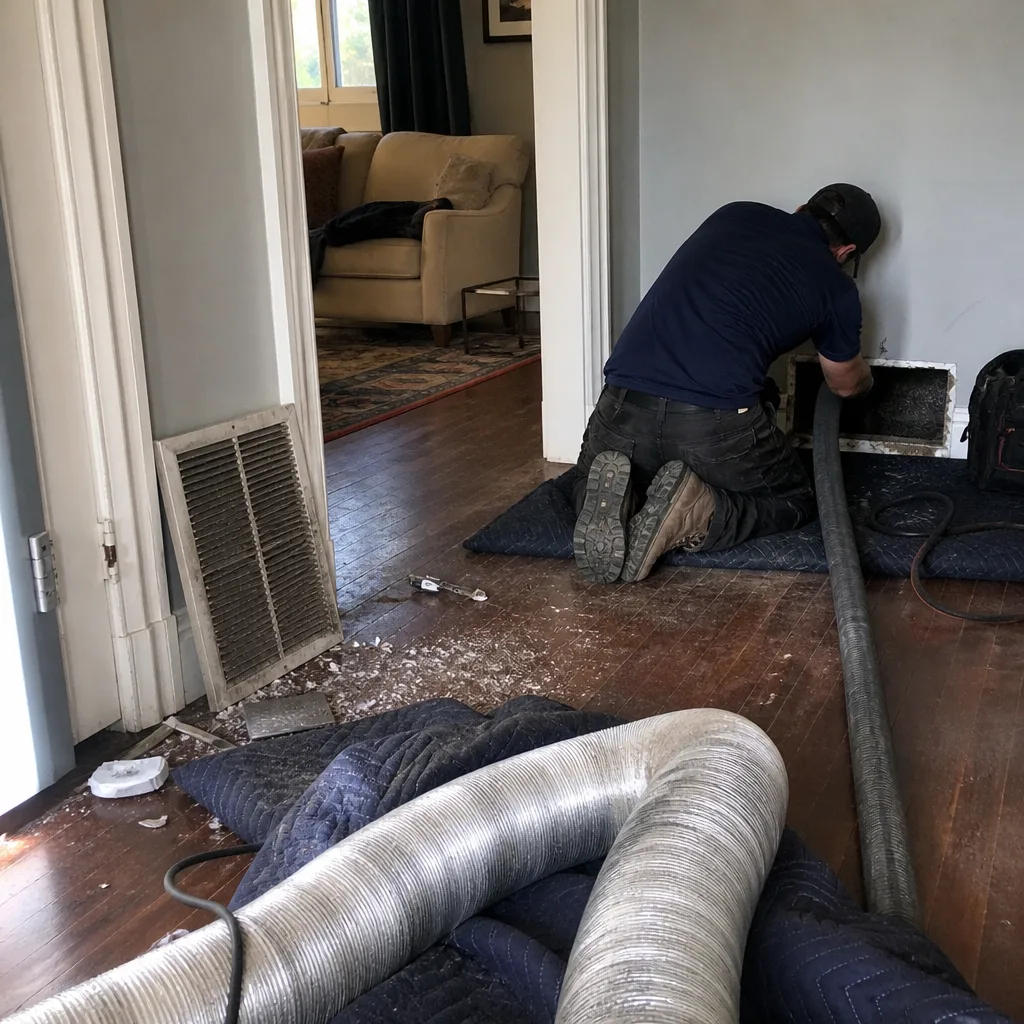 Before
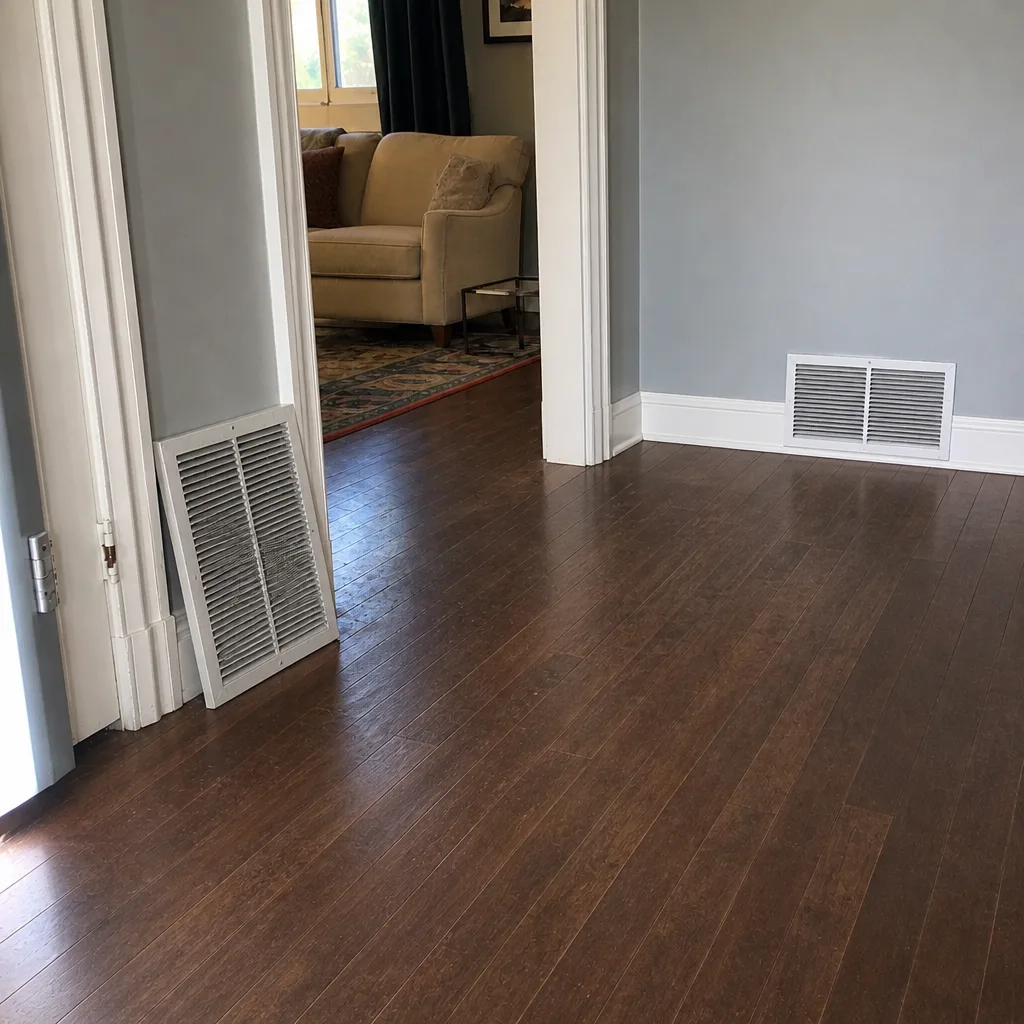 After
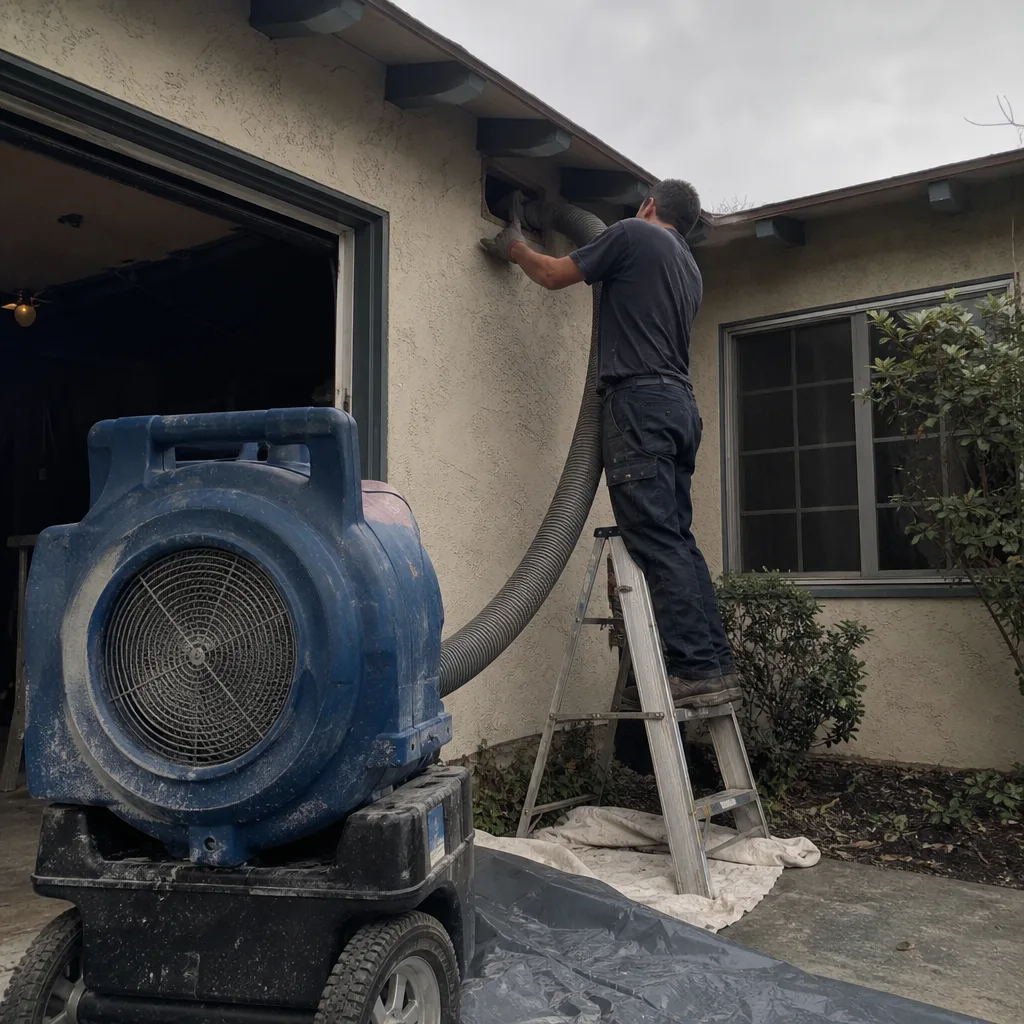 Before
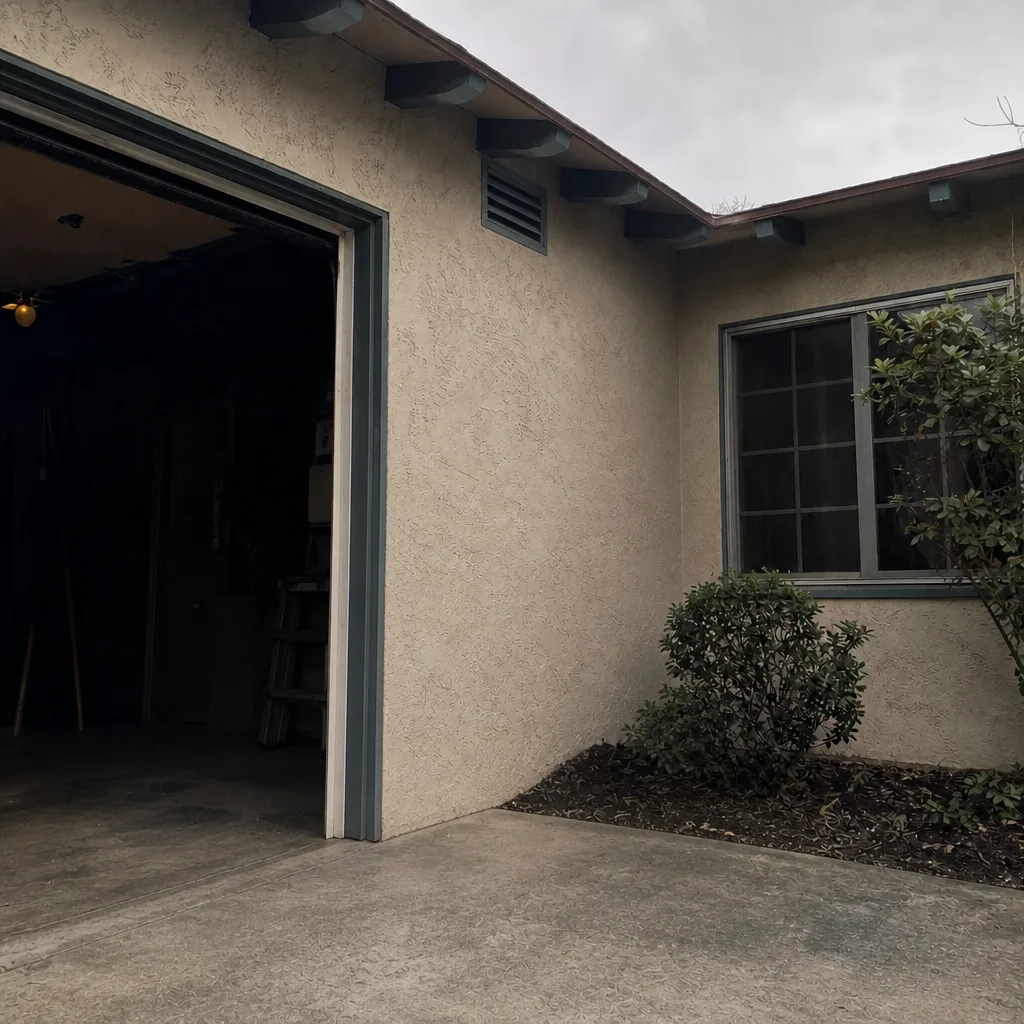 After
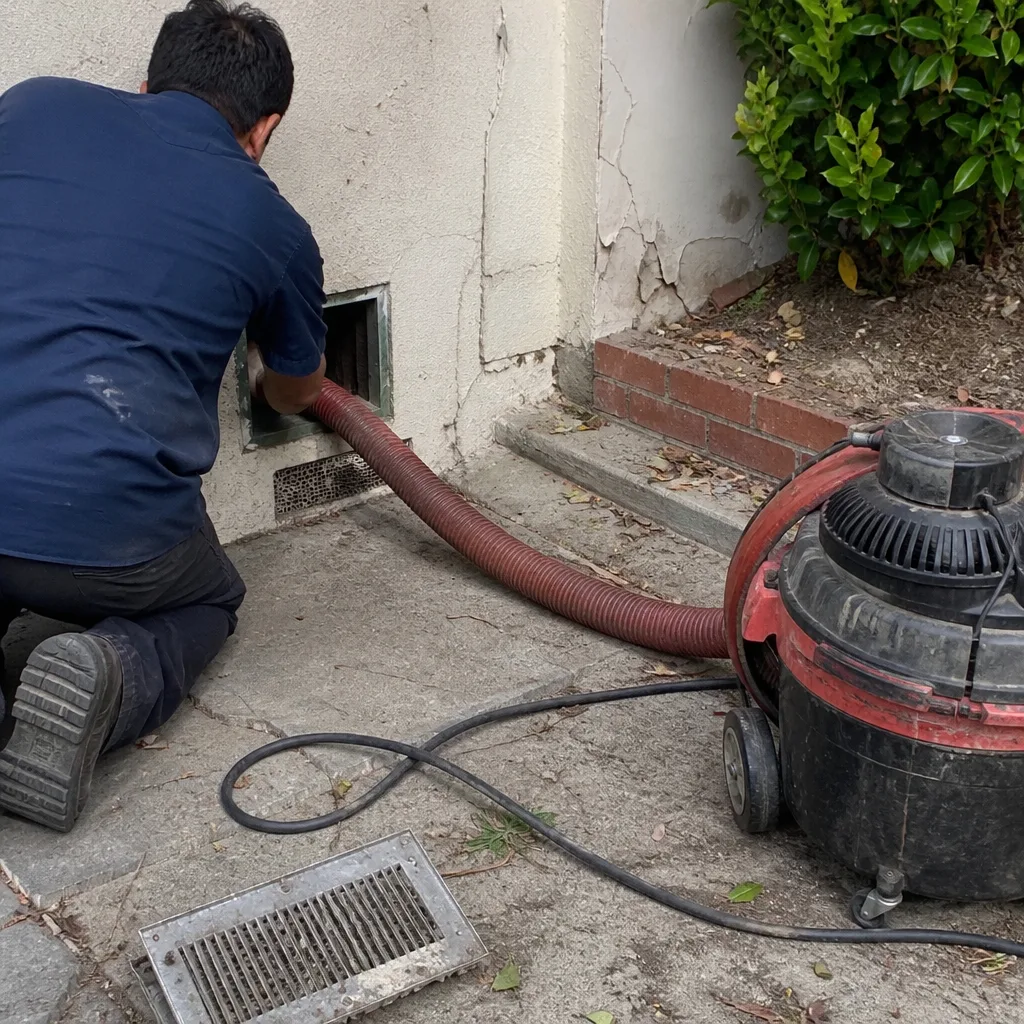 Before
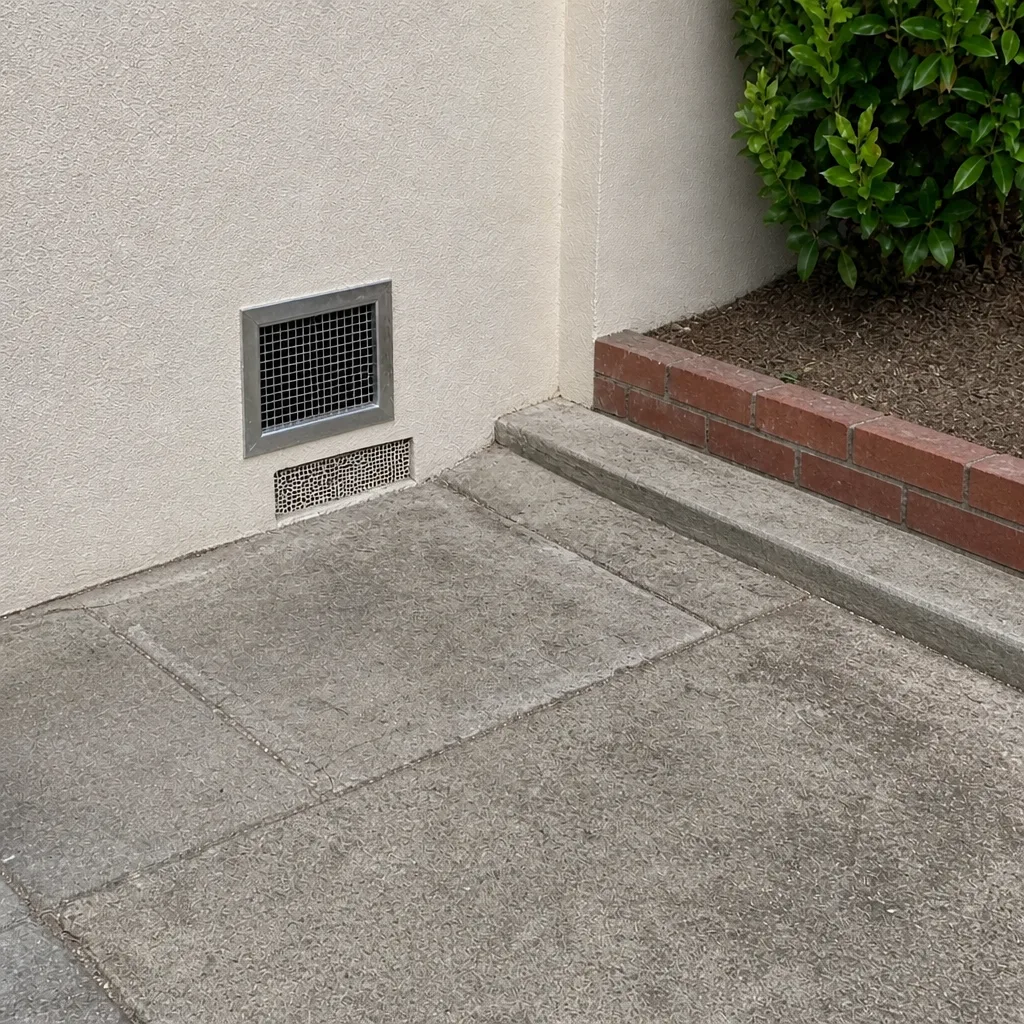 After
When to Call a Professional
Call a professional when you’re unsure which side of the permit line your ducts sit on. A duct cleaning that uncovers disconnected trunk lines, crushed flex runs at bends, or undersized returns is the moment to bring in a licensed contractor for the repair conversation. Call if you’re planning to sell and can’t produce permit records for duct work that’s been done. Call if your insurance adjuster has asked for documentation of mechanical work near a duct or air handler. Call if you’re a property manager who needs a diagnosis before authorizing repair at a Los Feliz multi-unit building. And call if you just want to know whether cleaning is what your ducts need or whether it’s something more. Air Duct Cleaning Los Feliz offers free estimates in Los Feliz – call (866) 937-7218. We’ll tell you plainly whether the work is maintenance or permitted construction, and we won’t sell repair work we aren’t the right company to do.
Frequently Asked Questions
No. Routine air duct cleaning – mechanical cleaning of supply and return runs – is a maintenance service and doesn’t require a permit in Los Feliz or anywhere in the City of Los Angeles. The permit question only enters when a job involves replacing ductwork, modifying the air handler cabinet or plenum, or adding a return air pathway, which are mechanical construction work that falls under LADBS. Call (866) 937-7218 if you want help sorting your ducts into one category or the other – estimates are free.
The City of Los Angeles Department of Building and Safety issues mechanical permits for properties inside city limits, and Los Feliz addresses are in the city, not unincorporated county territory. A few pockets in the Los Angeles area sit in unincorporated county land, so if you aren’t certain about your parcel, look it up online or call the department with the address before filing. A licensed contractor should know which jurisdiction applies; if they don’t, that’s worth catching early. Call (866) 937-7218 if you want to talk through what your duct job actually needs.
Title 24 duct sealing verification is a duct leakage test performed by a certified HERS rater to confirm replacement ductwork doesn’t leak conditioned air, and it applies when ductwork is installed or significantly replaced under a permit. It’s not something a routine duct cleaning triggers. It’s part of the permit-and-inspection process on a duct replacement job, and the rater is independent of the installing contractor. Ask the contractor whether HERS testing is included in the estimate before you sign. Call (866) 937-7218 to talk through your specific situation – estimates are free.
The required R-value for duct insulation on runs through unconditioned space is set by the California Energy Code for the applicable climate zone, and the number should be stated in the permit documents and the contractor’s written estimate. Don’t accept a vague answer. Los Feliz’s mild winters don’t make R-value optional; uninsulated flex in a hot attic loses cooling efficiency before the air reaches a room. Ask the contractor to point to the current code requirement and put it in writing. Call (866) 937-7218 for guidance on reading a duct replacement estimate.
Duct repair and replacement require a licensed contractor, typically under the C-20 Warm-Air Heating, Ventilating and Air-Conditioning classification. A duct cleaning company isn’t automatically the right company to install new ductwork, and you should ask for the license number in writing and verify it through the California Contractors State License Board before work starts. Some companies hold both capabilities; many don’t. Air Duct Cleaning Los Feliz is a cleaning and air quality specialist – we’ll tell you clearly when a job belongs with a licensed repair contractor. Call (866) 937-7218 with questions.
Undocumented mechanical work in wall or attic cavities creates a verification problem for insurance carriers, and it’s a common complication in claims involving mold or fire near a duct run or air handler. The adjuster needs to know when a component was installed and whether the work was done to code, and permit records and inspection sign-offs are the documents that answer that. Routine cleaning doesn’t require permits, so there’s nothing to document on the cleaning side; on the repair side, keeping the permit and HERS file is worth the effort. Call (866) 937-7218 for a free estimate or a plain-language conversation about your system.
The Bottom Line
The permit line for ducts in Los Feliz is simpler than it sounds once you see it: cleaning is maintenance, and replacing or modifying ductwork and the air handler is construction. Cleaning doesn’t need LADBS involvement. Replacement ductwork needs a mechanical permit from the City of Los Angeles Department of Building and Safety, Title 24 compliance including HERS duct sealing verification, and insulation meeting the climate-zone R-value. Any repair work should come from a licensed C-20 contractor whose license you can verify. The file you keep – permit number, inspection card, HERS report, photos – is what answers the insurance and resale questions later. If your ducts only need cleaning, we’ll say so. If they need repair, we’ll point you to a licensed contractor and help you document what you have. Call (866) 937-7218. We answer 24/7. Fast dispatch from 7am to 7pm, Sunday through Friday.
Written by the team at Air Duct Cleaning Los Feliz.