
Last updated November 22, 2026
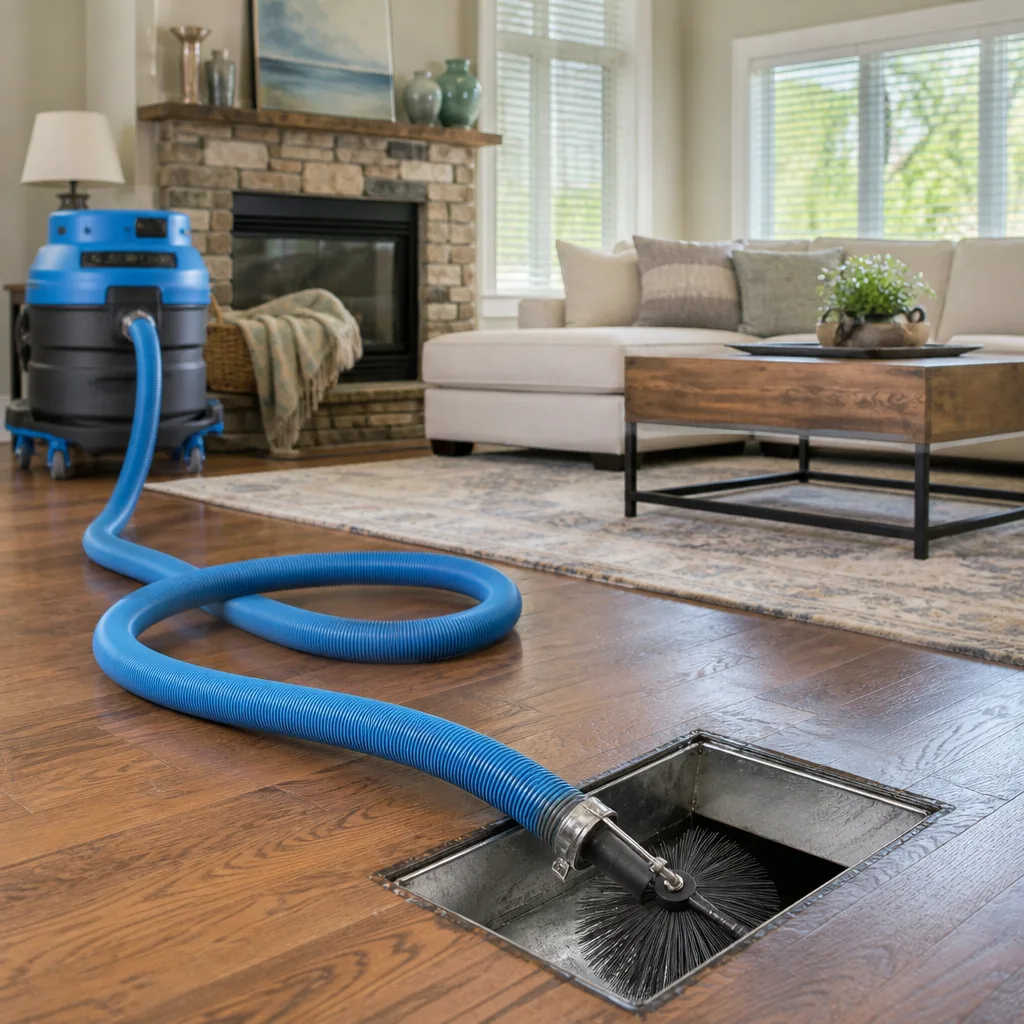 Whole-home duct cleaning
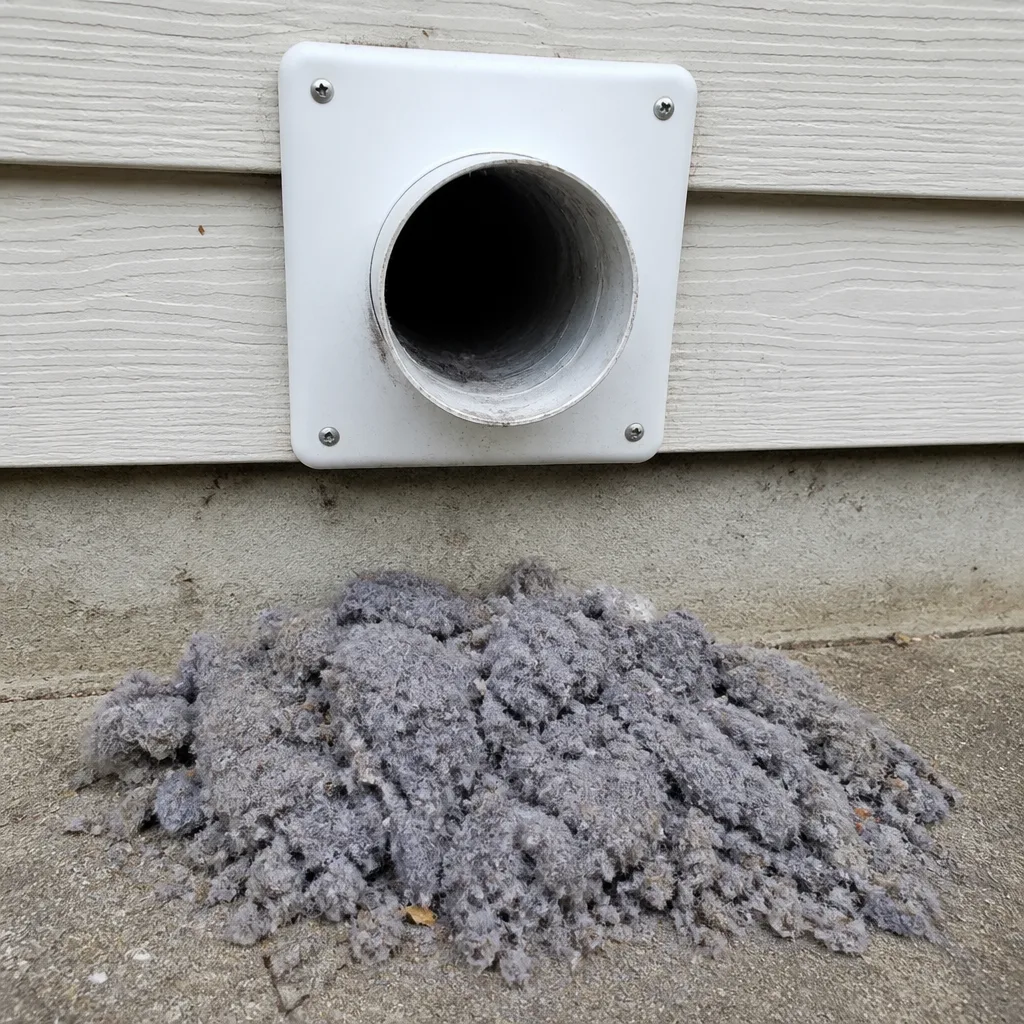 Dryer vent cleaning
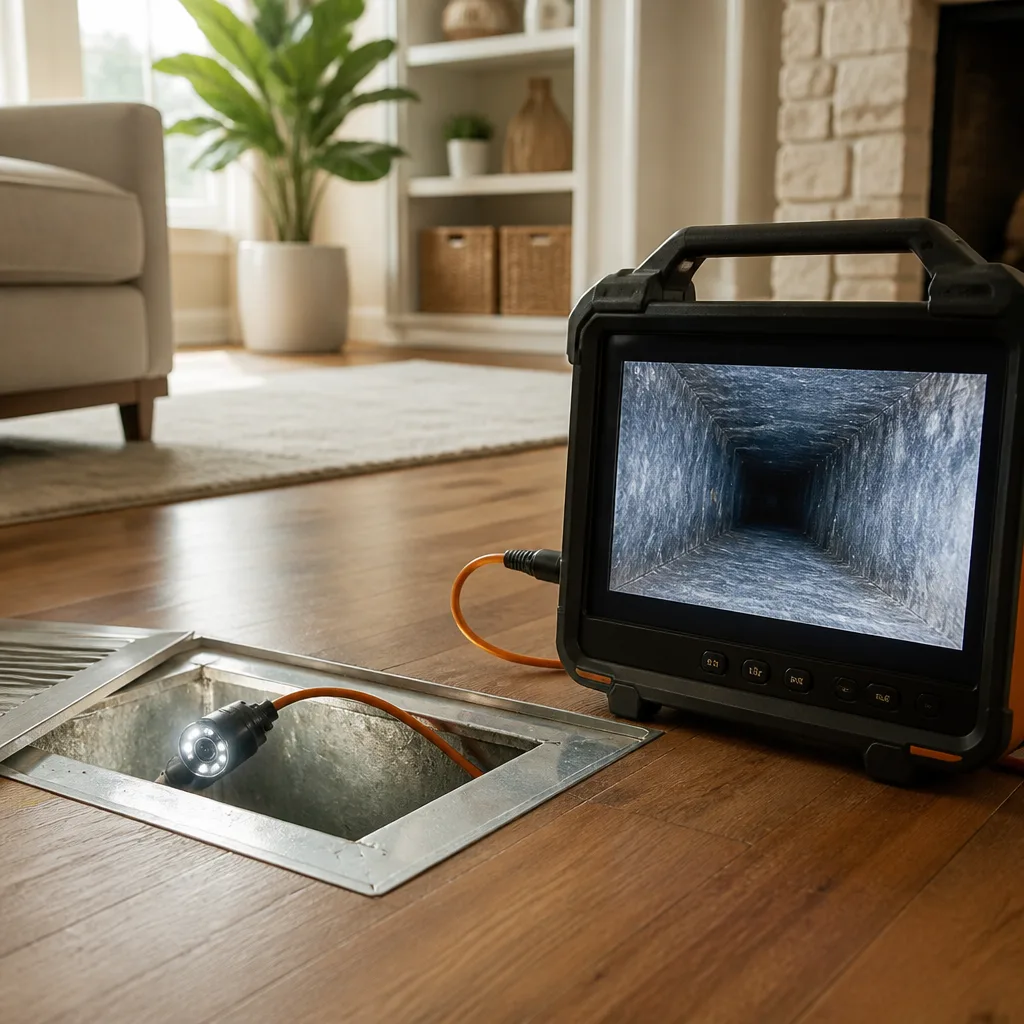 Camera inspection
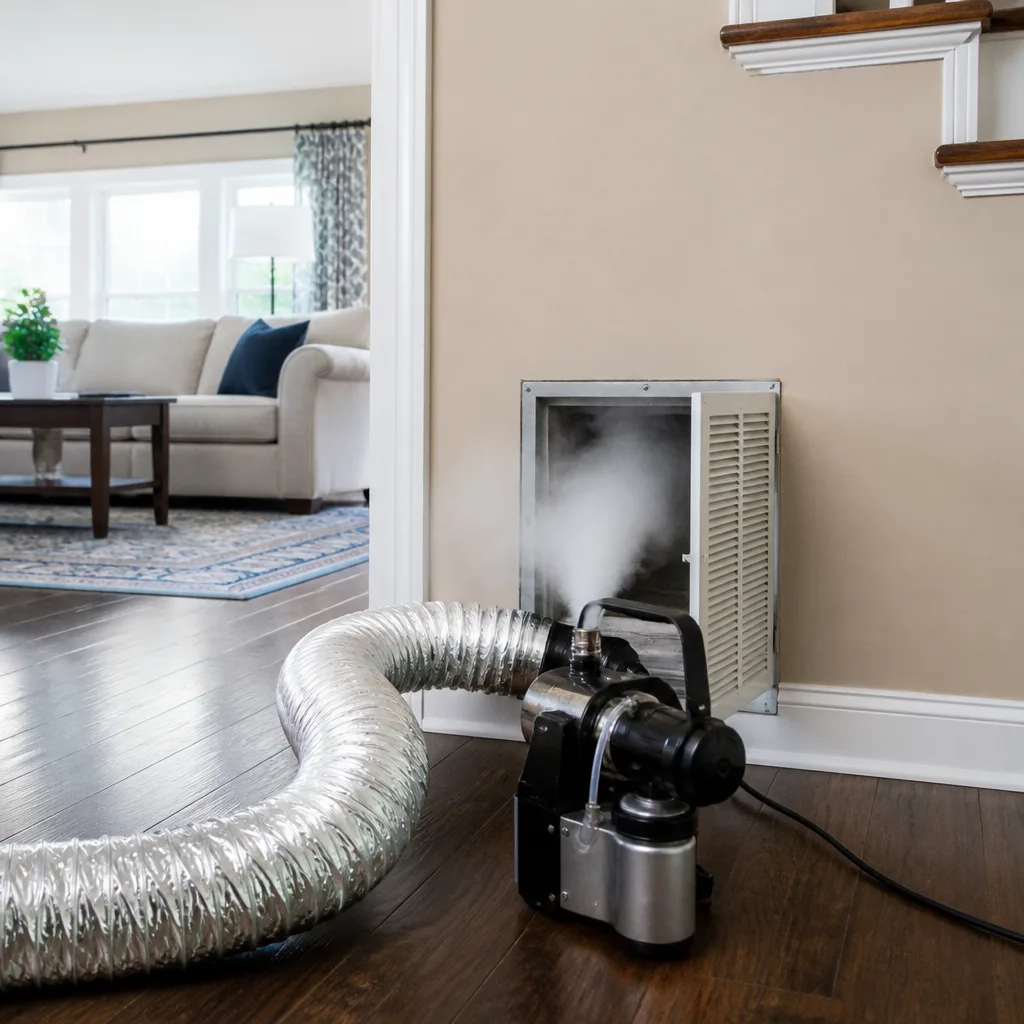 Sanitizing & deodorizing
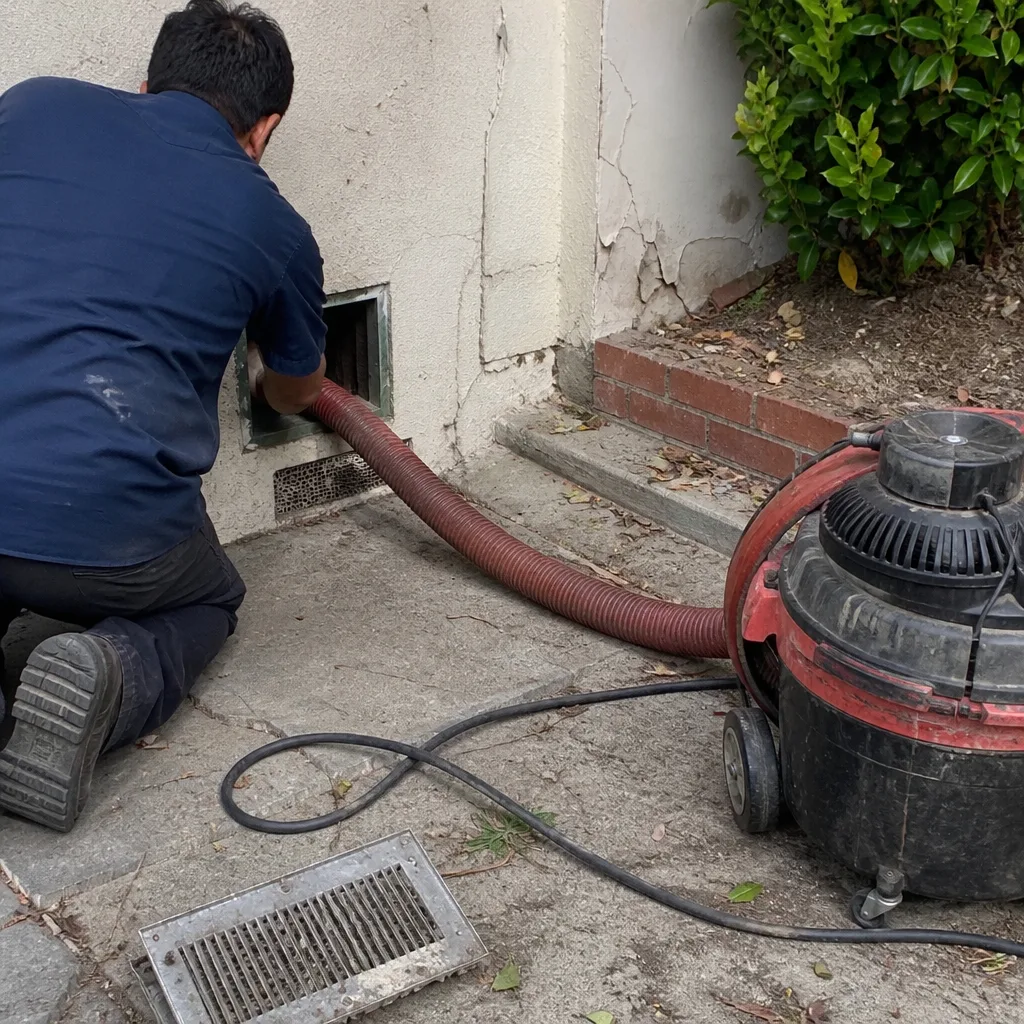
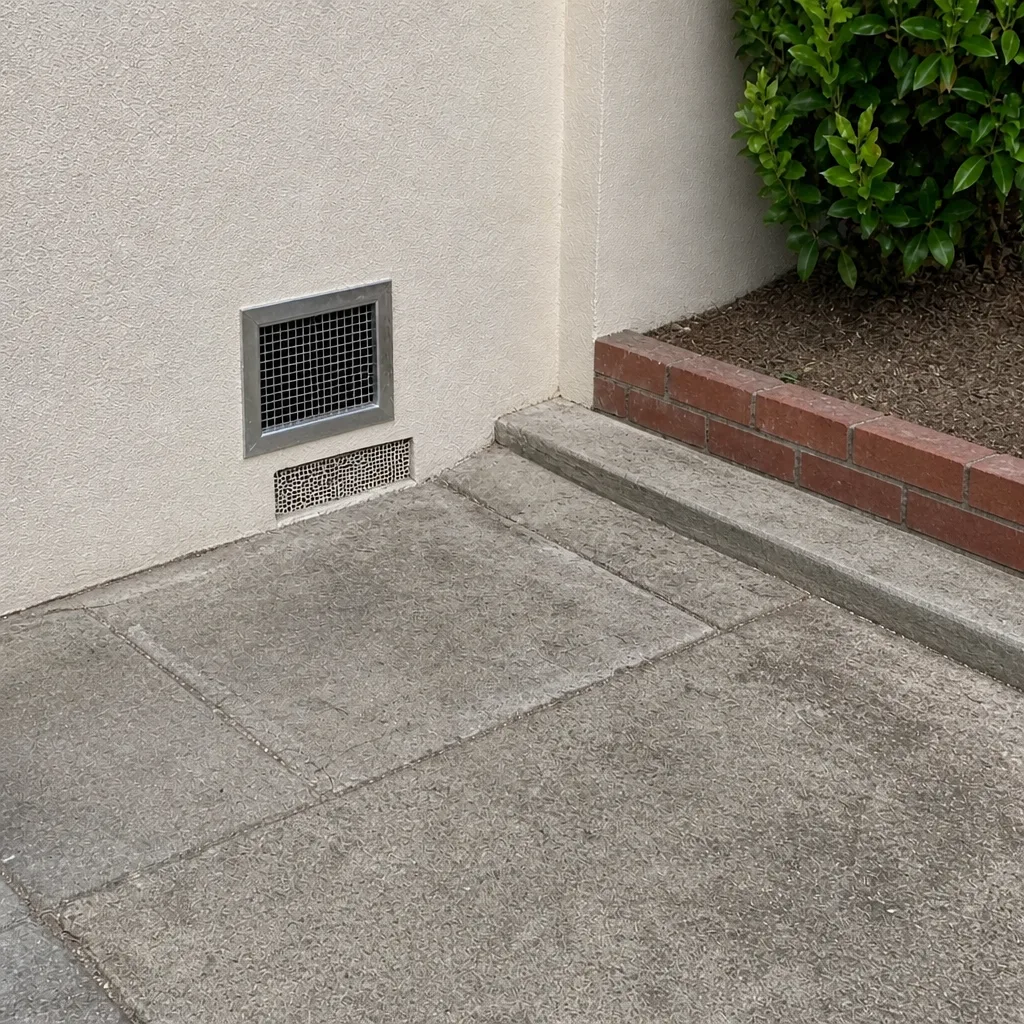
Whole-system duct and dryer vent check with before-and-after photos - you see exactly what came out of your vents
That "$99 whole-house special" is a bait ad - the real number appears once they are in your hallway, or the "clean" is a shop-vac at the register. We photograph the inside of your ducts before and after instead.
The Complete Guide to Air Duct Cleaning in Los Feliz
Most people assume clean ducts are the finish line. In our experience they’re only the first segment of a longer loop. A single contaminated evaporator coil can re-seed a freshly cleaned duct system within one cooling season, which is why a job that stops at the vents usually looks good for a few weeks and then quietly reverses. Ductwork is not a standalone pipe; it’s one pressurized segment of an air handler, a coil, a return plenum, and a set of registers breathing together. In this guide, written for Los Feliz homeowners and property managers, we walk through the full pathway: how the housing stock shapes the work, why negative-pressure cleaning beats brush-only methods, how to verify a job was actually done, and what sanitizing really means.
Quick Answer
Air duct cleaning in Los Feliz means mechanically dislodging and removing accumulated debris from supply ducts, the return air pathway, registers, the blower, and (when accessible) the evaporator coil under negative pressure, then verifying airflow and static pressure before and after with documentation. Done correctly, it’s a whole-system service, not a vent vacuum. If a contractor only cleans supply trunks and leaves the return side and blower untouched, the dirtiest surfaces stay in place.
Styles & brands we work with
- Whole-home duct cleaning
- Dryer vent cleaning
- Camera inspection
- Sanitizing & deodorizing
Table of Contents
- Why Ducts Are One Segment of a Pressurized Air Pathway
- How Los Feliz’s Housing Stock Shapes Duct Work
- Why Negative-Pressure Cleaning Beats Brush-Only Methods
- The Return Air Pathway: The Segment Most Jobs Skip
- How to Verify a Cleaning Was Actually Effective
- What “Sanitizing” Actually Means in a Duct
- Common Mistakes to Avoid
- Frequently Asked Questions
Why Ducts Are One Segment of a Pressurized Air Pathway
An HVAC system is a loop, not a stack of independent parts. The blower pulls air in through the return grilles and return plenum, pushes it across the evaporator coil, and forces it out through the supply trunks into each room. Every surface the air touches picks up a share of what’s floating in it. When one segment is fouled, the others absorb the load.
This is why cleaning a supply trunk without addressing the coil, blower wheel, and return side so often fails. The blower wheel on a multi-decade system is usually coated in a fine dust film that reduces delivered airflow. The evaporator coil fins trap that same debris on the wet side, and once it’s damp it becomes a sticky substrate that re-releases particulate every time the system cycles. Registers and grilles collect dust on the room-facing side, which is the part a homeowner notices, but the interior plenum behind them usually has more.
The full pathway we look at during a Los Feliz job:
- Return grilles and plenum. Often the dirtiest segment because it draws in room air including cooking, pet, and outdoor particulate.
- Air handler and blower wheel. Where airflow loss shows up first.
- Evaporator coil. Accessible on most systems for inspection and cleaning.
- Supply trunks and branch runs. Whether flex or rigid, each run needs source-side agitation and negative pressure at the far end.
- Registers and diffusers. Removed, cleaned, and reinstalled.
Treating the duct as one segment is the fastest route to a repeat job six months later. Treating it as a loop is what makes the result last. That’s the difference between symptom cleaning and system cleaning.
How Los Feliz’s Housing Stock Shapes Duct Work
Los Feliz is a neighborhood of Craftsman bungalows, Spanish Revival homes, and mid-century builds, many of them 1920s through 1960s. That age matters because HVAC systems were retrofitted into most of them decades after construction. What you get in practice is ductwork that was routed around existing structure rather than designed into it.
Three patterns come up again and again in Los Feliz:
- Attic-routed flex duct. A lot of these homes have flex runs lying across attic joists or strapped under rafters. Flex is convenient and cheap to install, but the corrugated interior ribs trap particulate and the outer jacket can sag, pinch, or separate at the collar. Loose flex runs also lose static pressure at bends.
- Inaccessible crawl plenums. A raised foundation is common here, and return plenums sometimes route through the crawl space where there’s no clear access panel. Getting a camera and air tools in requires cutting an access or working from a floor register, and that’s a step cheaper quotes frequently skip.
- Mixed duct materials. Original rigid galvanized sheet metal in the supply trunk, patched with flex branches added during a remodel. Each material needs different agitation and cleaning technique. A rotary brush that works inside sheet metal will tear a flex liner if the technician isn’t paying attention to what’s in front of them.
The mild climate is worth mentioning too. Los Feliz runs a long cooling season and only a short heating season, so the evaporator coil and the return side see far more runtime than the supply trunk. Dirt accumulates where the air moves, and the return is where it moves most.
For a full-system treatment across these different duct configurations, professional air duct cleaning in Los Feliz starts with a visual assessment of which runs are accessible, which need access panels cut, and which flex sections should be flagged for repair before cleaning.
Why Negative-Pressure Cleaning Beats Brush-Only Methods
Negative-pressure mechanical cleaning means the duct is put under vacuum at one end while a mechanical agitator works the interior walls at the other end, so the debris dislodges and travels out of the system rather than recirculating into the room. Brush-only methods fail this test on old systems because a spinning brush loosens particulate without a pressure differential strong enough to carry it away.
What we use on Los Feliz jobs:
- Rotobrush rotary contact cleaning systems. The rotary brush whip reaches the full interior wall of the duct, not just the floor of the run, and it’s the industry benchmark for dislodging compacted debris.
- Nikro high-powered vacuums and equipment. Trusted by NADCA-certified contractors nationwide, and specifically built for the CFM required to hold a duct under negative pressure while agitation happens.
- Abatement Technologies filtration equipment. For jobs where contamination is heavier or the workspace needs containment, this gear scrubs the exhaust air rather than dumping particulate into the living space.
In some setups, especially where the duct isn’t easily reached or there’s no room for a truck at the curb (common on hillside streets in Los Feliz), a high-CFM portable vacuum with a HEPA stage is the practical option. The principle is the same: negative pressure at the collection end, mechanical agitation at the work end, and containment in between. The vacuum doesn’t just capture what the brush throws loose; it keeps the whole run under a pressure differential so dust travels in one direction.
The cleaning also isn’t done until registers and grilles are removed and cleaned off-system, and the air handler cabinet is wiped down. Debris that settles back into a just-cleaned cabinet isn’t removed by definition.
The Return Air Pathway: The Segment Most Jobs Skip
The return side of a residential HVAC loop handles the larger share of airborne particulate because it’s pulling from occupied rooms, and yet it’s the segment most cleaning quotes leave out. Clean supply trunks with a dirty return plenum is a half-job, and it’s easy to spot: the supply runs stay clean, but the return grilles fill back up within weeks.
Why the return gets skipped:
- Return plenums in older Los Feliz homes are often built with hard-to-reach access, sometimes in the crawl space or a ceiling chase with no service panel.
- Return ducts tend to run wider and shorter than supply trunks, so equipment sized for a 6-inch flex branch struggles to maintain pressure in a larger return.
- Some budget quotes price per vent and simply don’t include the return count on the estimate.
A full return-side clean involves:
- Removing and cleaning every return grille.
- Cutting or using an existing access panel at the return plenum so tools can reach the full interior.
- Running rotary agitation through the plenum and the return drop into the air handler cabinet.
- Holding the entire return side under negative pressure through the air handler so dislodged debris travels to the collection point.
- Re-sealing any access cut with tape and mastic so the plenum stays airtight afterward.
If a quote doesn’t include the return air pathway in writing, ask before the appointment. It’s the single biggest determinant of whether the ducts stay clean through the next Los Feliz cooling season.
How to Verify a Cleaning Was Actually Effective
Cleaning is measurable. Static pressure across the air handler, delivered airflow at the registers, and before-and-after camera footage inside the ducts are the three checkpoints that turn a cleaning into a verifiable job rather than a service call you have to take on faith.
What to ask for at the end of the visit:
- Static pressure readings before and after. A pressure gauge placed at the supply and return sides of the air handler shows the total external static pressure. A job that was effective will show a meaningful drop if the ducts were significantly restricted.
- Camera inspection footage. The same interior surfaces should be photographed before and after cleaning using an inspection camera. Ask to see the return plenum and blower wheel specifically – those are the segments most likely to be skipped.
- Airflow measurement at a representative register. A balometer or flow hood reading at the furthest register before and after the work tells you whether the delivered air actually improved, not just whether the vents look cleaner.
- Before-and-after photos of your own ducts. Anything generic on a website is a marketing image; the photos of the work in your home are the documentation that matters.
Ask any contractor you’re considering how they document a job. If the answer is a verbal description only, the verification step is missing. Our position is that the written estimate and the before-and-after documentation should be able to stand on their own without any sales pressure.
If the ducts have also lost pressure from seam separation or disconnected flex runs, cleaning documents the problem but doesn’t fix it. That’s why air duct cleaning is more useful when paired with duct repair and sealing: the cleaning verifies the baseline, and the sealing holds the improvement.
What “Sanitizing” Actually Means in a Duct
Sanitizing in a duct context means applying an EPA-registered antimicrobial product to the cleaned interior surfaces at label-specified concentration and dwell time, not fogging the space with a scented spray. The distinction matters because a scented spray does nothing to microbial growth on a surface, and it can mask a smell that pointed to a real moisture problem.
When sanitizing is genuinely warranted:
- There’s visible microbial growth inside the duct or on the coil, and the source of moisture has already been corrected.
- There’s a persistent musty odor that returns after a mechanical cleaning.
- The home has had a water event that reached a duct or the air handler cabinet.
- A property manager is resetting a unit between tenants and wants a documented baseline.
When it isn’t needed:
- The ducts are dirty but dry and there’s no growth or odor. Cleaning alone is the right step.
- The odor is coming from the air handler or coil but the moisture source hasn’t been found. Sanitizing without fixing the source is a temporary measure.
- The product being used isn’t EPA-registered for HVAC surfaces. Ask to see what’s being applied and its label.
Where ongoing air quality matters, filtration upgrades do more work than sanitizing alone. Our team stocks and installs Honeywell and Aprilaire filtration and air quality products, which bridge the gap between a one-time cleaning and a longer-term indoor air strategy. The right approach for most Los Feliz homes is a mechanical clean first, then filtration designed for the system’s static pressure budget.
Duct Repair and Sealing: Fixing the Cause, Not the Symptom
Most ductwork in Los Feliz has at least one weak point that’s losing air, and cleaning doesn’t repair it. A disconnected flex collar, a seam that opened in the attic heat, or a run that was never mastic-sealed at install will keep dumping conditioned air into a crawl space or attic rather than the room. Cleaning the duct and leaving the leak loses a large share of what the cleaning was supposed to fix.
What repair and sealing actually involve:
- Locating leaks by visual inspection and pressure testing along the supply and return runs.
- Reconnecting and re-strapping flex collars with mechanical fasteners, then mastic-sealing the seam.
- Sealing sheet-metal joints with mastic rather than duct tape, which dries out and fails.
- Re-sealing any access panels cut during cleaning so the plenum stays airtight.
- Verifying improvement via static pressure readings at the air handler.
Sealing matters for indoor air quality too. Leaky return ducts in an attic or crawl space pull in unfiltered air from outside the conditioned envelope, and that air carries whatever is floating around in that space. A sealed duct pulls from the room only, through the filter. If you have any reason to think your ducts are losing air, ask for a pressure test during the estimate.
Dryer Vent Cleaning: The Fire-Risk Step Most Contractors Don’t Promote
Dryer vents are a duct, and they clog the same way return ducts do, but the consequence is different: a lint-packed vent restricts airflow through the dryer, causes the appliance to overheat, and creates a fire risk. This is one of the most under-promoted services in the trade, and one of the most genuinely useful.
Signs a dryer vent in a Los Feliz home needs attention:
- Clothes take longer than one cycle to dry.
- The dryer cabinet or the room gets noticeably hotter than normal during a cycle.
- Lint is visible around the outside vent hood, or the hood flap doesn’t open freely.
- The transition duct behind the dryer is crushed, kinked, or made of thin foil that’s collapsed.
We treat dryer vent cleaning as a standalone service because it’s a different system with a different safety profile. The cleaning uses the same rotary agitation and high-CFM vacuum equipment, run from the exterior hood back to the dryer connection, and ends with a visual verification that the vent is clear end to end. The transition duct behind the dryer should be smooth rigid or semi-rigid metal, not crushed foil; if it is, replacing it during the visit is part of the job.
Common Mistakes to Avoid
- Assuming a low per-vent quote covers the return side. Per-vent pricing almost always counts supply registers only, and the return plenum is the dirtiest segment. Ask in writing whether returns, the blower, and the coil are included before you book.
- Accepting a brush-only job on an old system. A spinning brush in a Los Feliz Craftsman duct loosens debris without removing it. Insist that the setup puts the duct under negative pressure while agitation happens.
- Skipping the blower wheel. A dirty blower wheel is a large share of the airflow loss on an older system, and a clean duct upstream of a dirty blower is a half-job. The blower needs to be inspected and cleaned when accessible.
- Sanitizing without fixing the moisture source. A scented spray can cover a musty odor for a couple of weeks, but if the source is a wet coil or a leaking seam, microbial growth will return. Find the source, fix it, then sanitize if it’s still warranted.
- Treating flex duct like sheet metal. A rotary brush sized for a rigid trunk will tear a flex liner. Ask how the technician will adjust technique when the duct run switches materials mid-system, which happens a lot in these homes.
- Accepting a job with no documentation. If you don’t get before-and-after photos of your own ducts plus a static pressure reading, you can’t tell whether the work was actually done. Ask in advance.
- Cleaning before repairing. A duct run that’s disconnected at the collar won’t hold pressure during cleaning, and it will lose air afterward. Repair and seal is the right first step, then clean.
See the difference
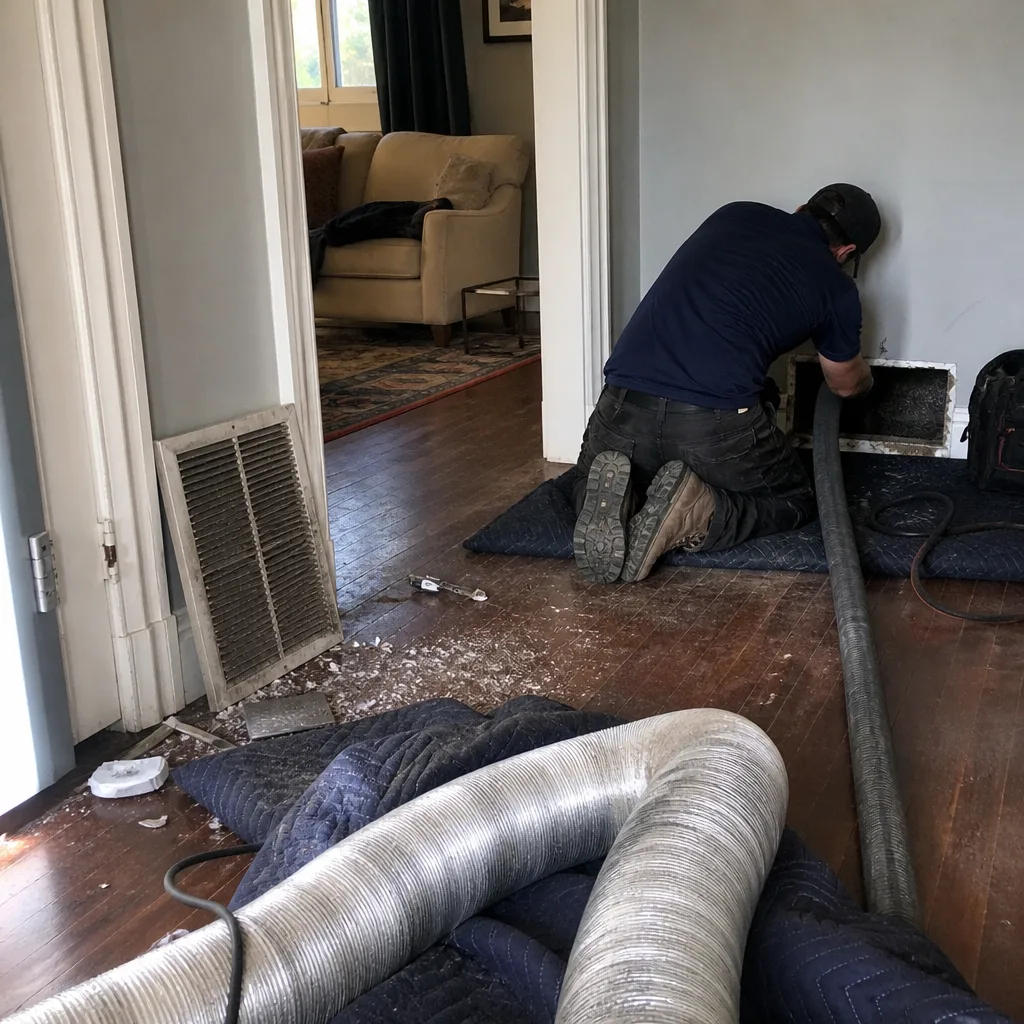 Before
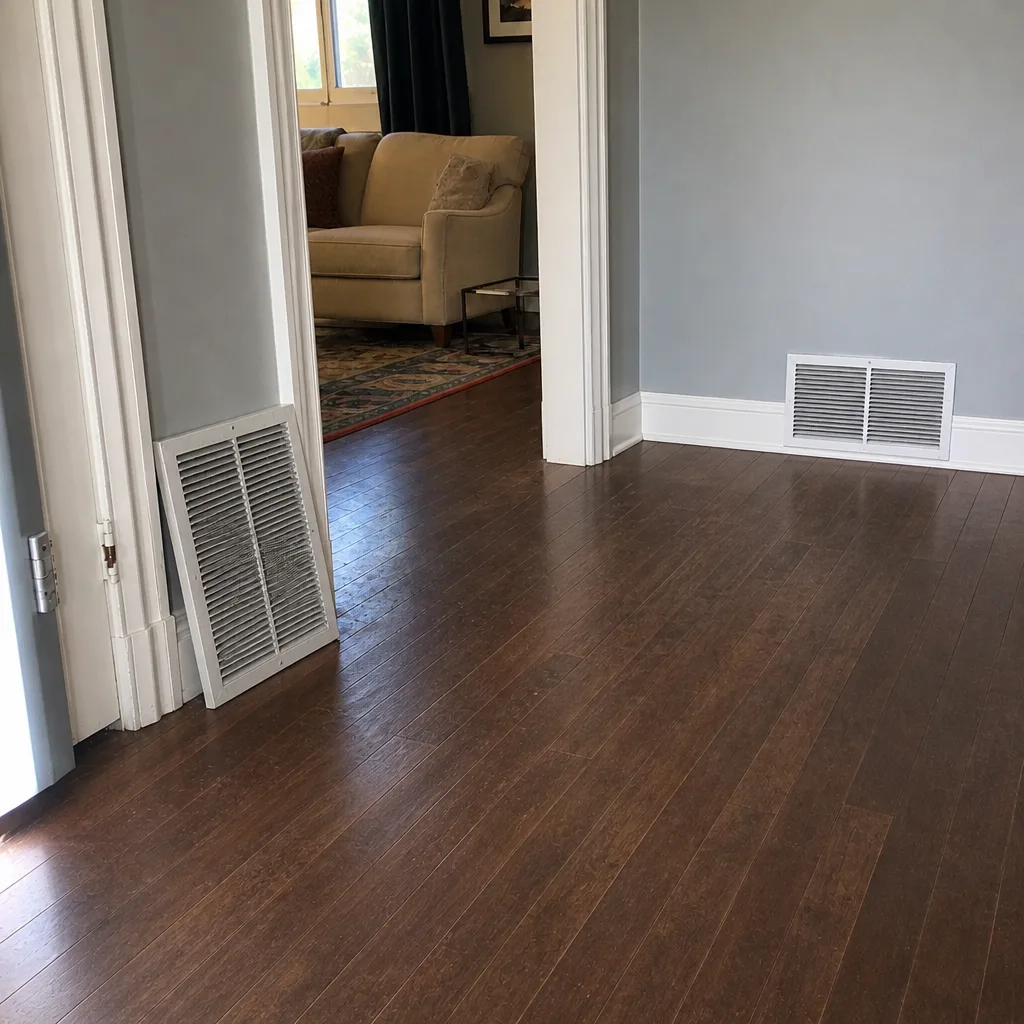 After
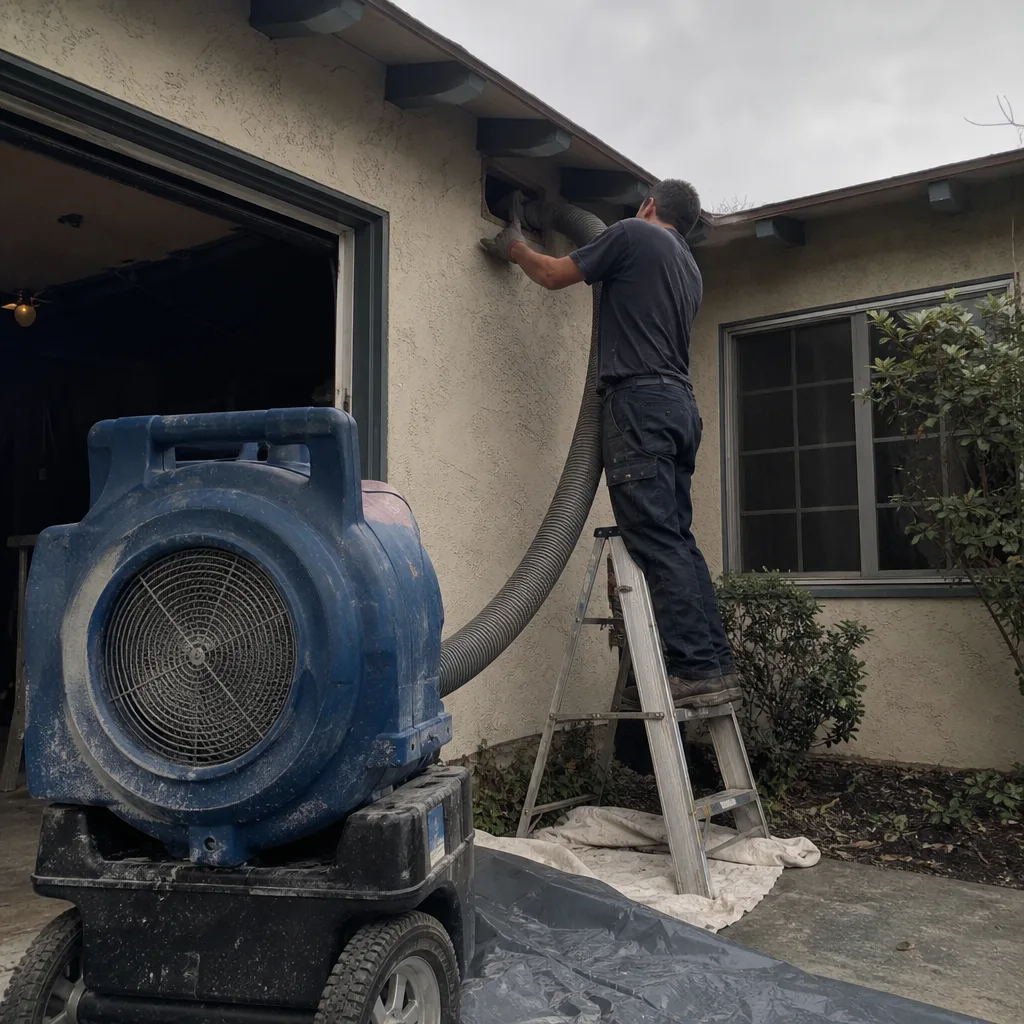 Before
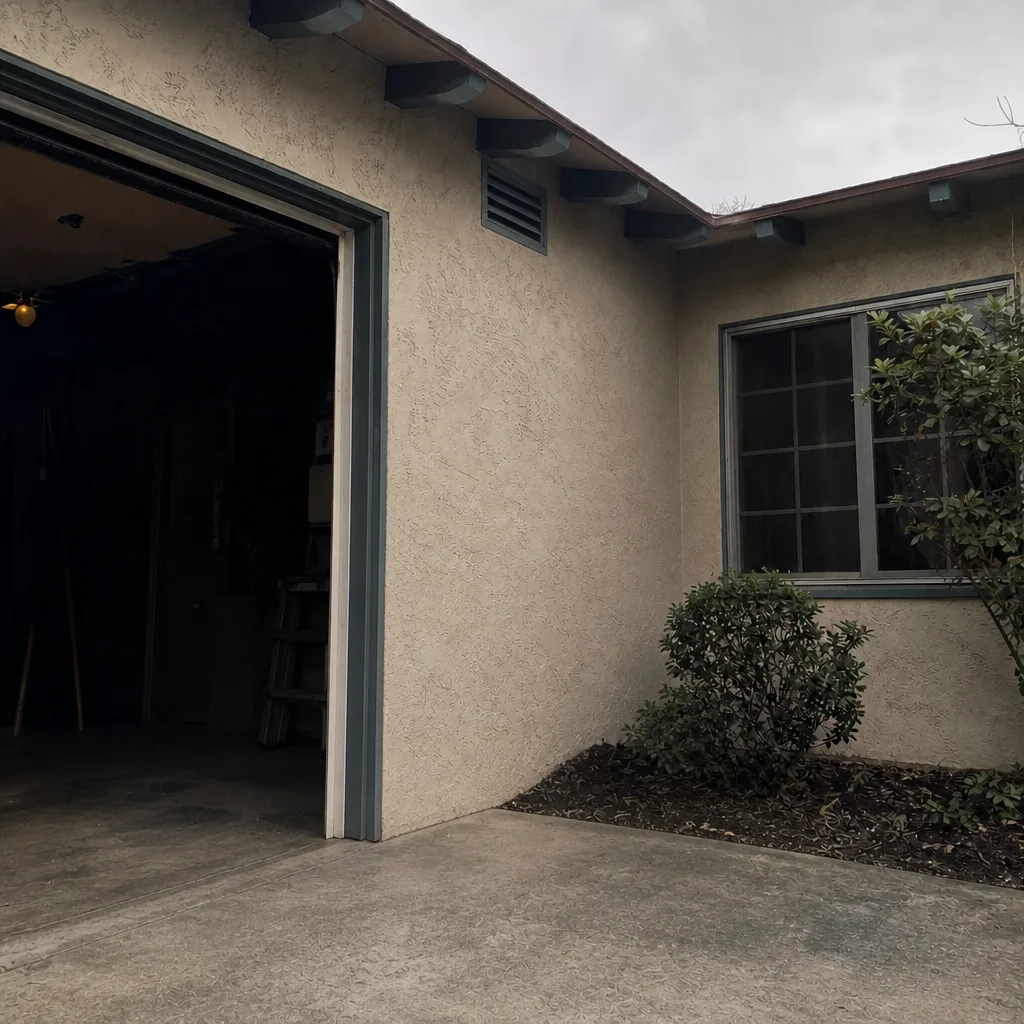 After
 Before
 After
When to Call a Professional
Any one of these is a good reason to have a professional assess the system in Los Feliz: visible dust blowing from a supply register when the system starts, a persistent musty odor in one room, a household member with worsening allergy or asthma symptoms that track with HVAC runtime, a rise in energy bills without a rate change, visible rodent activity or debris in the ducts, a musty smell after a water intrusion, or a dryer that takes more than one cycle to finish a load. If your home is fifteen or more years old and you don’t have documentation that the ducts have ever been cleaned, an assessment is worth booking. Air Duct Cleaning Los Feliz offers free estimates in Los Feliz. Call (866) 937-7218.
What Does a Full-System HVAC Cleaning Include?
Full-system HVAC cleaning goes beyond duct cleaning to include the air handler cabinet, blower wheel, and evaporator coil, so the moving parts of the loop are also addressed. Duct cleaning without the air handler cabinet cleaned leaves a source of re-contamination that the ducts feed from. Typical parts of the service:
- Air handler cabinet wiped down and vacuumed with HEPA filtration.
- Blower wheel pulled, cleaned, and reinstalled (on most residential configurations).
- Evaporator coil inspected and cleaned when accessible.
- Condensate pan and drain line checked while the coil is exposed.
- Static pressure measured before and after.
Coil cleaning is the piece most duct-only contractors skip, and it matters because a wet coil is the surface that re-seeds a clean duct system fastest. The mild Los Feliz climate keeps the cooling side running for a long portion of the year, so the evaporator coil sees more runtime than the heating side and dirties faster.
Frequently Asked Questions
Most full-system duct cleanings in Los Feliz fall into a typical range, and the written estimate after an on-site assessment sets the final price. The estimate should be flat per system, not per vent, and should clearly state whether the return side, blower wheel, and coil are included. Beware any quote that comes in well below the local trend without the return side in writing. Call (866) 937-7218 for a free estimate.
Cheap quotes are usually cheap because they’re quoting a different job: supply vents only, no negative pressure, no return plenum, no documentation. The savings disappears once the return side is added or the job gets repeated six months later. A written flat price that covers the full pathway with before-and-after photos is the number worth comparing. Call (866) 937-7218 for an honest quote you can compare.
Ask for three things at the end of the visit: before-and-after photos of your own ducts, static pressure readings from the air handler, and camera footage of the return plenum interior. A contractor who can’t provide those on request is either not doing the work or not documenting it. Our team builds those three checkpoints into every cleaning. Call (866) 937-7218 to schedule.
Every three to five years is a reasonable interval for most homes with pets or allergy-sensitive occupants, and longer for homes with less occupancy and no pets. Homes near major roads or with heavy pet dander should lean toward the shorter end. If you don’t have records and the home is fifteen or more years old, a baseline cleaning is worth booking regardless of schedule. Call (866) 937-7218 for a free assessment.
Yes, in a subtle way. The long cooling season means the return side and evaporator coil run more hours per year than the heating side, so those segments accumulate particulate faster than the supply trunk. The supply runs in a Los Feliz home usually look cleaner than the return plenum underneath them, which is why cleaning has to cover both sides to be effective. Call (866) 937-7218 to talk through your system.
Yes, and it’s usually more efficient to do both at once because the same rotary agitation and high-CFM vacuum equipment is used for each. Dryer vent cleaning runs the cleaning from the exterior hood back to the dryer transition, with a visual verification that the vent is clear end to end. Call (866) 937-7218 to book both together.
Yes, and it’s a core part of what we do. Cleaning alone won’t fix a disconnected flex collar, a seam that opened in the attic heat, or a run that was never sealed at install. We locate leaks, mechanically reconnect and mastic-seal, re-seal any access panels cut during cleaning, then verify the improvement with a static pressure reading. Call (866) 937-7218 for a free estimate that includes both cleaning and repair scope.
We install Honeywell and Aprilaire filtration and air quality products, both of which are recognizable, warranty-backed names. On a Los Feliz home with older ductwork, filtration sizing matters because an oversized filter raises static pressure and reduces delivered airflow; the right spec depends on what the system can handle. Talk to us during the estimate and we’ll walk through the options. Call (866) 937-7218.
The Bottom Line
Duct cleaning in Los Feliz only lasts when it treats the system as a full pressurized pathway rather than a stack of isolated pipes. That means cleaning the return plenum as well as the supply runs, cleaning the air handler cabinet and blower, inspecting the coil while you’re there, sealing any leaks you find, and documenting the result with before-and-after photos, static pressure readings, and camera footage. Negative-pressure mechanical cleaning with the right equipment does the work; HVAC cleaning closes the loop; the written estimate sets a flat price per system, and before-and-after photos tell you whether the job was actually done. If any of that gets skipped, the ducts return to where they were within a season or two. Get the whole system assessed before you book a cleaning.
Contact
If you’re ready to have the full air pathway in your Los Feliz home assessed, we’d be glad to help. Call (866) 937-7218 for a free estimate. We answer 24/7. Fast dispatch from 7am to 7pm, Sunday through Friday. The local pro who performs the work is licensed and insured as their state requires, and the written estimate sets one flat price per system before any work starts.
Written by the team at Air Duct Cleaning Los Feliz.